Metabolic rate adaptation during caloric restriction is not addressed by GLP-1 mechanisms
As body weight decreases, total energy expenditure decreases disproportionately — adaptive thermogenesis. GLP-1 receptor agonists reduce energy intake; they do not prevent the metabolic rate adaptation that follows. Interventions targeting metabolic efficiency directly address a distinct and complementary mechanism.

Muscle catabolism during GLP-1-induced weight loss is a clinically recognized risk
Multiple studies examining weight composition during GLP-1 therapy have found that lean mass — not just fat — is reduced, particularly without adequate protein intake and resistance exercise. Skeletal muscle is the primary site of insulin-stimulated glucose disposal, and lean mass loss directly reduces basal metabolic rate — a compounding problem for long-term outcomes.

Inulin-based fiber supports satiety mechanisms distinct from GLP-1 receptor agonism
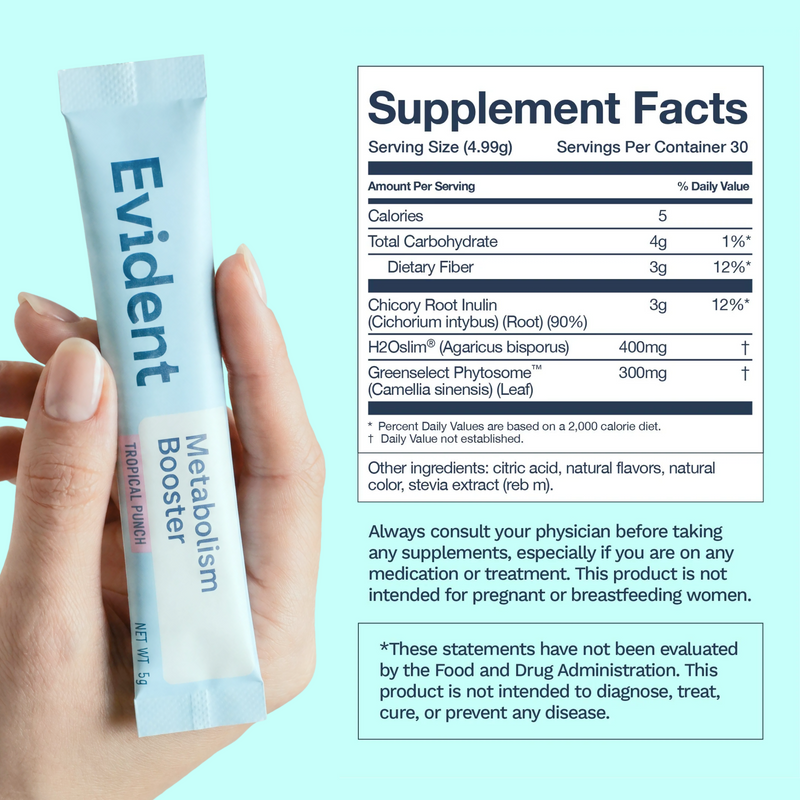
Chicory Root Inulin supports satiety through two pathways: viscosity-based slowing of gastric transit, and stimulation of gut-derived GLP-1 and PYY from intestinal L-cells. This is not redundant with GLP-1 receptor agonist drugs — endogenous GLP-1 stimulated by fiber acts locally and transiently through different receptors. Fiber-based satiety provides additive benefit.

H2OSlim® reduces caloric uptake from dietary fat through a physical, non-systemic mechanism
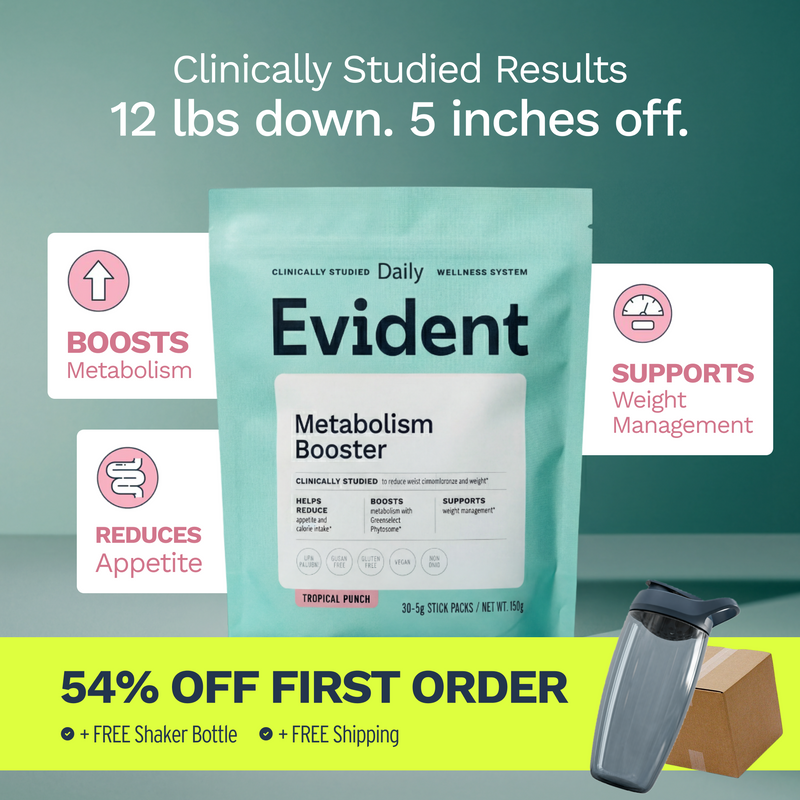
H2OSlim® (Agaricus bisporus polysaccharide extract) operates in the gastrointestinal lumen, not systemically. It forms a cationic polymer matrix that electrostatically binds dietary fat, reducing absorption before it occurs. In a 12-week randomized, double-blind, placebo-controlled trial, subjects taking 400 mg/day showed ~12 lbs average weight reduction (vs ~1 lb placebo), ~5 inches waist reduction (vs <1 inch placebo), with no central nervous system activity. This mechanism is entirely complementary to appetite suppression.

Chicory root inulin supports fullness and appetite signaling
Chicory root inulin is a prebiotic fiber clinically shown to support feelings of fullness and reduce calorie intake — so you eat less without feeling restricted. Because it works through the gut microbiome, consistent daily intake is what produces the effect.

LP-1 therapy is a powerful tool. Closing the gaps it leaves open is how you maximize what it can do.
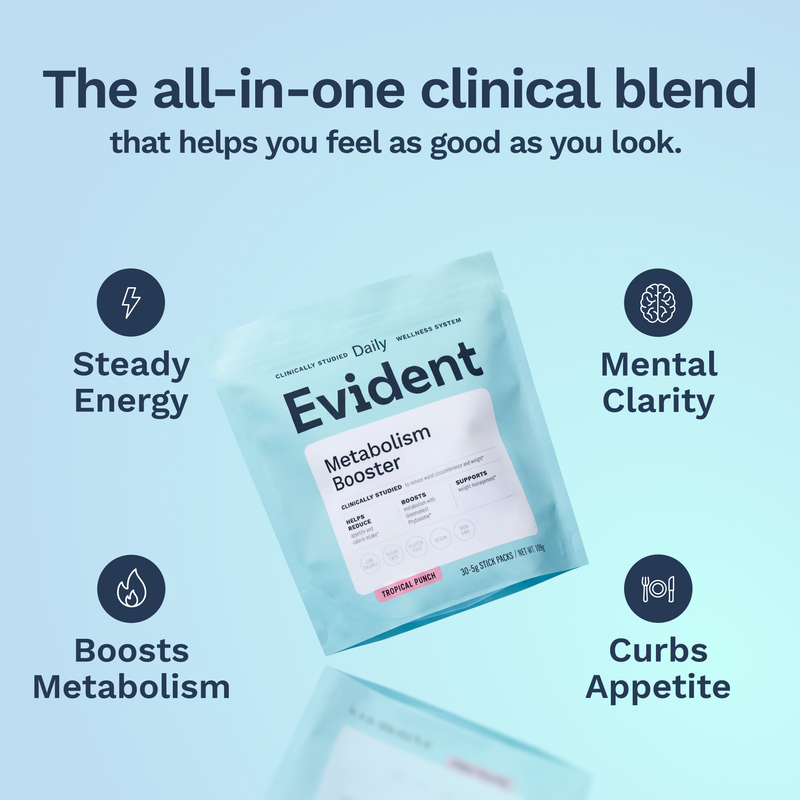
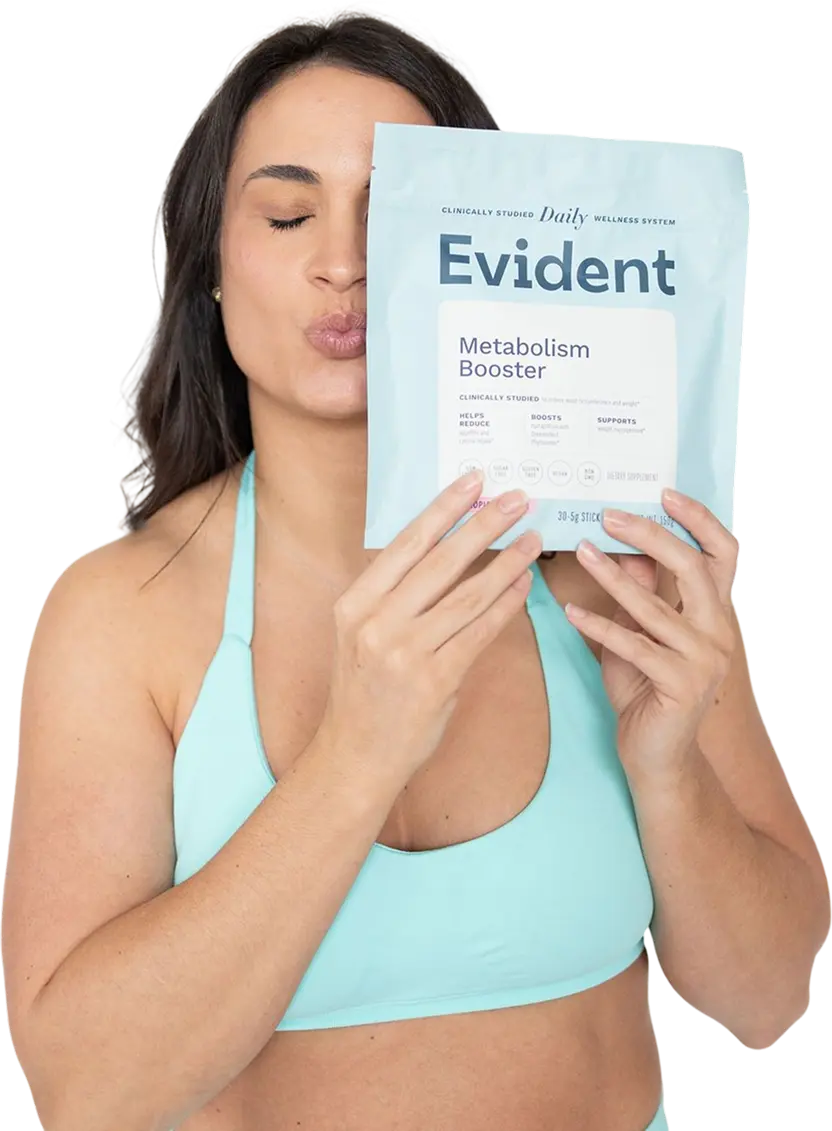
Evident Metabolism Booster targets fat absorption, metabolic efficiency, and gut-based satiety — three mechanisms GLP-1 receptor agonists don't directly address.
GLP-1 therapy alters gut motility in ways that affect microbiome composition
GLP-1 receptor agonists reduce gastric emptying and alter intestinal transit time, modifying the environment in which gut bacteria colonize. Research suggests shifts in microbial diversity in some users. Prebiotic fiber supplementation selectively feeds Bifidobacterium and Lactobacillus populations that support short-chain fatty acid production and gut barrier integrity — a recognized area of emerging clinical interest for GLP-1 users.

Cellular energy production may be compromised during caloric restriction, independent of GLP-1 mechanism
Coenzyme Q10 is essential for mitochondrial ATP synthesis and declines with age and metabolic stress, including caloric restriction. A 2024 randomized, placebo-controlled trial (Fogacci et al.) using Ubiqsome® — a phytosome-delivered CoQ10 with superior tissue bioavailability — showed significant improvements in fatigue scores, handgrip strength, and aerobic endurance. For GLP-1 users experiencing energy reduction, cellular energy support addresses a distinct mechanism.

Caloric restriction elevates cortisol — which compounds GLP-1 metabolic goals
The HPA axis responds to caloric restriction with increased cortisol secretion. Elevated cortisol promotes insulin resistance, abdominal fat retention, and muscle catabolism — all counterproductive to GLP-1 therapy goals.

GLP-1-induced nausea and reduced intake create hydration challenges that affect supplement efficacy
Reduced food and beverage intake during GLP-1 therapy, combined with gastrointestinal side effects, creates risk of inadequate hydration. Both inulin and H2OSlim® require adequate water intake to function as studied. The stick pack format — mixed into 8–10 oz of water, consumed within 3 minutes — creates a structured daily hydration event supporting both supplement mechanism and general fluid intake.

H2OSlim® has demonstrated effects on lipid panels beyond weight outcomes
The same 12-week H2OSlim® trial also reported ~21 mg/dL reduction in total cholesterol and ~27 mg/dL reduction in LDL in the active group. For GLP-1 users managing cardiometabolic risk factors — a common indication for GLP-1 prescription — lipid management support is a meaningful secondary benefit.

Metabolic habits built during GLP-1 therapy determine long-term outcomes after tapering
Published data on weight regain following GLP-1 discontinuation shows a significant portion of weight lost is typically regained within 12–24 months without ongoing intervention. Foundational metabolic support habits established during therapy — including daily supplementation — need to persist beyond the treatment period. Building the habit during active therapy, not after, reduces transition risk.

The safety profile of non-stimulant metabolic support is particularly relevant for GLP-1 users
GLP-1 receptor agonists already affect gastrointestinal function and cardiovascular parameters. Stimulant-based metabolic supplements — thermogenics containing caffeine or synephrine — add HPA axis activation and potential GI side effect exacerbation. A non-stimulant formula operating through physical and prebiotic mechanisms carries a fundamentally more compatible safety profile for concurrent GLP-1 use.