Insulin resistance is present in the majority of PCOS cases — and most interventions don't directly address it
Research estimates that 50–70% of women with PCOS have some degree of insulin resistance, regardless of body weight. It is a primary feature of the syndrome — not a consequence of lifestyle choices. Insulin resistance drives compensatory hyperinsulinemia, which elevates androgen production, worsens ovulatory dysfunction, and promotes central adiposity. Interventions targeting metabolic efficiency directly are better positioned than caloric restriction alone to address this underlying driver.

PCOS-related fatigue has a cellular basis, not just a lifestyle one
Emerging research points to mitochondrial dysfunction as a contributing factor in PCOS-associated fatigue. Reduced mitochondrial efficiency impairs ATP output, leading to persistent low energy even with adequate sleep and nutrition. Ingredients that support the mitochondrial electron transport chain — such as Coenzyme Q10 — have shown measurable improvements in fatigue scores in relevant populations. Lifestyle changes alone often cannot reach this mechanism.

Leptin and ghrelin dysregulation explains appetite difficulty in PCOS
Leptin resistance — more common in PCOS populations — causes the body to fail to respond appropriately to its own fullness signals, contributing to increased caloric intake and difficulty maintaining weight loss. Prebiotic fiber supplementation, particularly inulin, supports gut-derived appetite signaling (GLP-1 and PYY secretion) — offering a mechanism-based approach to satiety that doesn't rely on stimulants or restriction alone.

Satiety support starts in the gut — and consistency is what makes it work
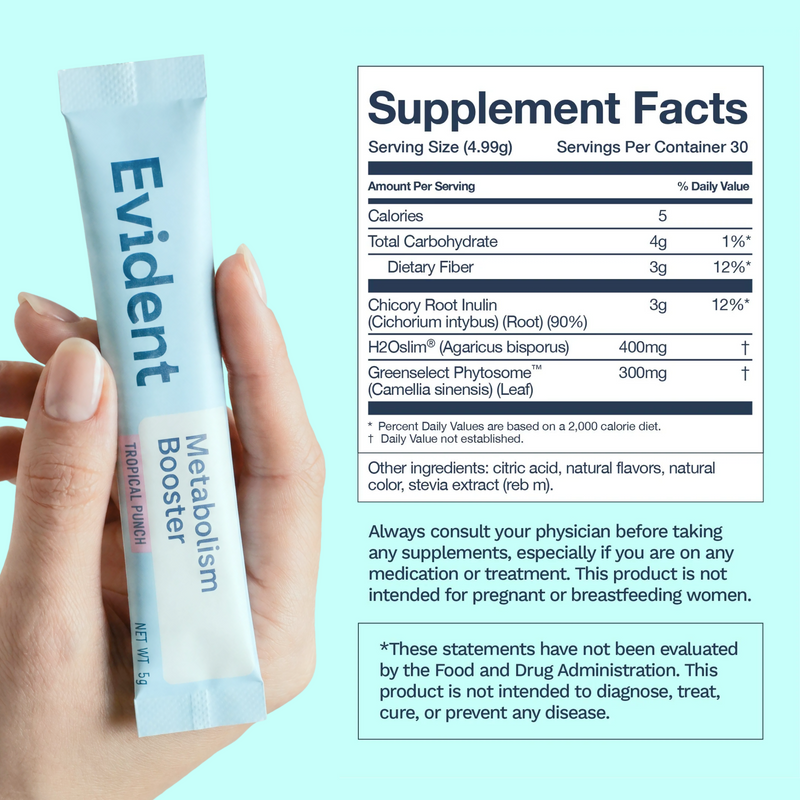
Chicory root inulin is a prebiotic fiber clinically shown to support feelings of fullness and reduce calorie intake. Inulin-based satiety support requires consistent daily intake for gut microbiome adaptation to occur — short-term use does not produce the same outcomes.

Reducing dietary fat absorption is a non-stimulant mechanism for calorie management
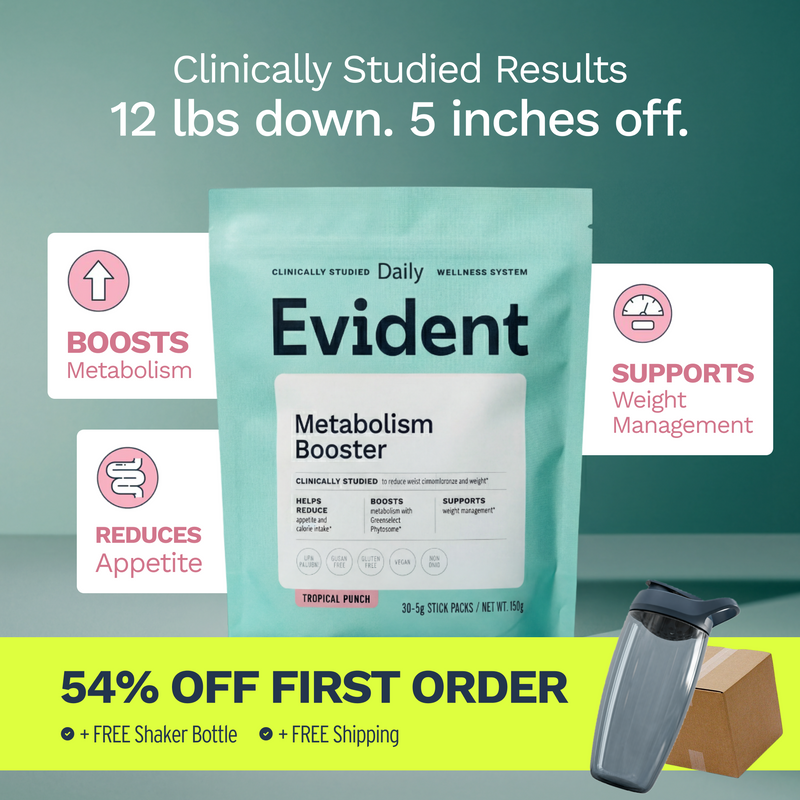
H2OSlim® (Agaricus bisporus extract) forms a cationic polymer matrix in the digestive tract that binds dietary fat before absorption occurs. The mechanism is non-systemic and does not interact with the central nervous system or elevate cortisol. A 12-week randomized, double-blind, placebo-controlled trial reported ~12 lbs average weight reduction in the H2OSlim® group versus ~1 lb placebo, and ~5 inches waist reduction versus less than 1 inch placebo.

The most effective metabolic interventions for PCOS work through multiple mechanisms simultaneously — not a single lever.
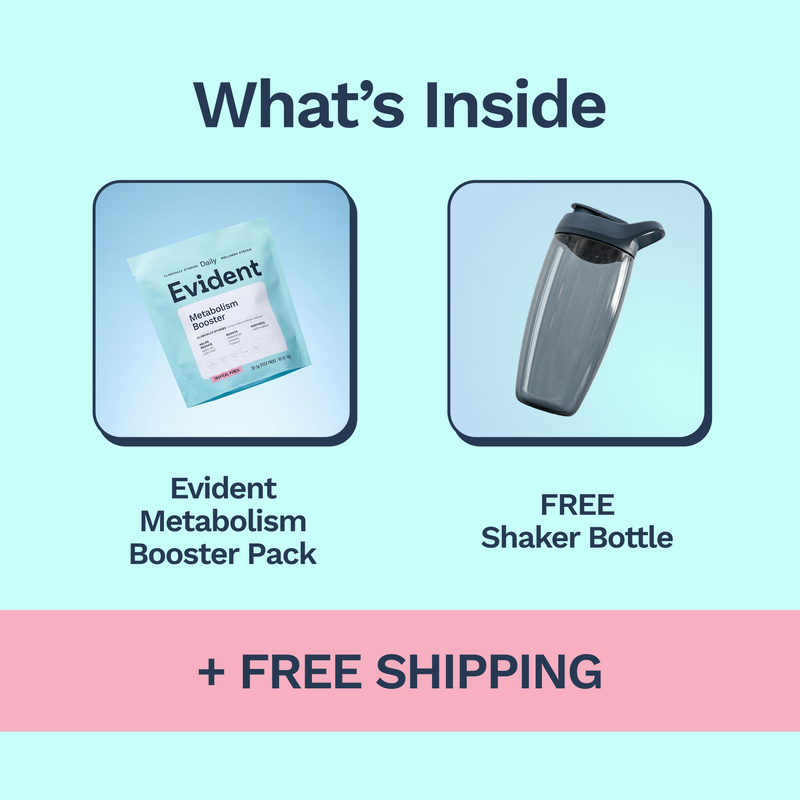
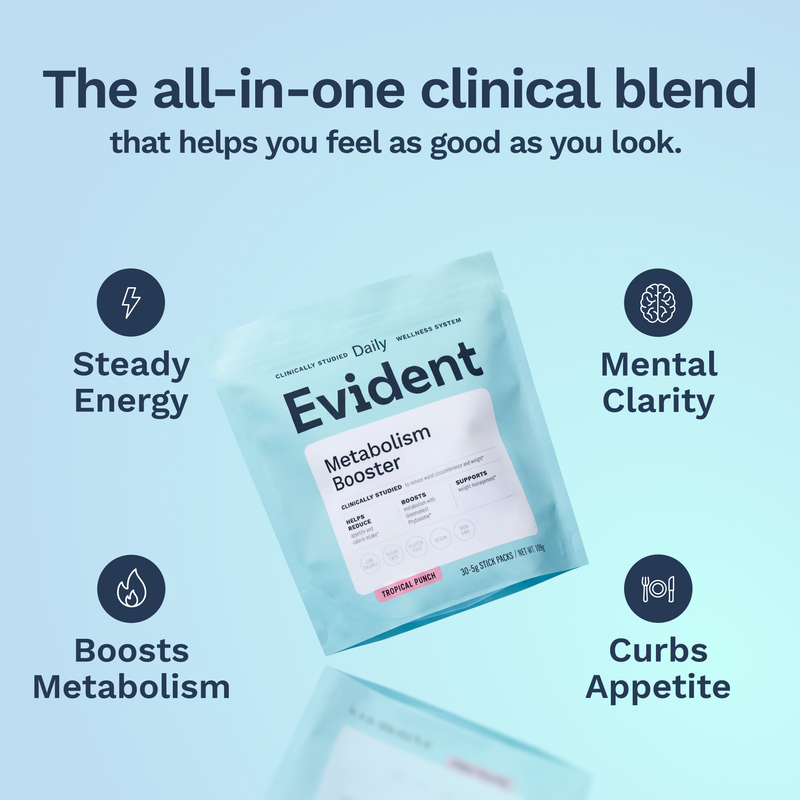
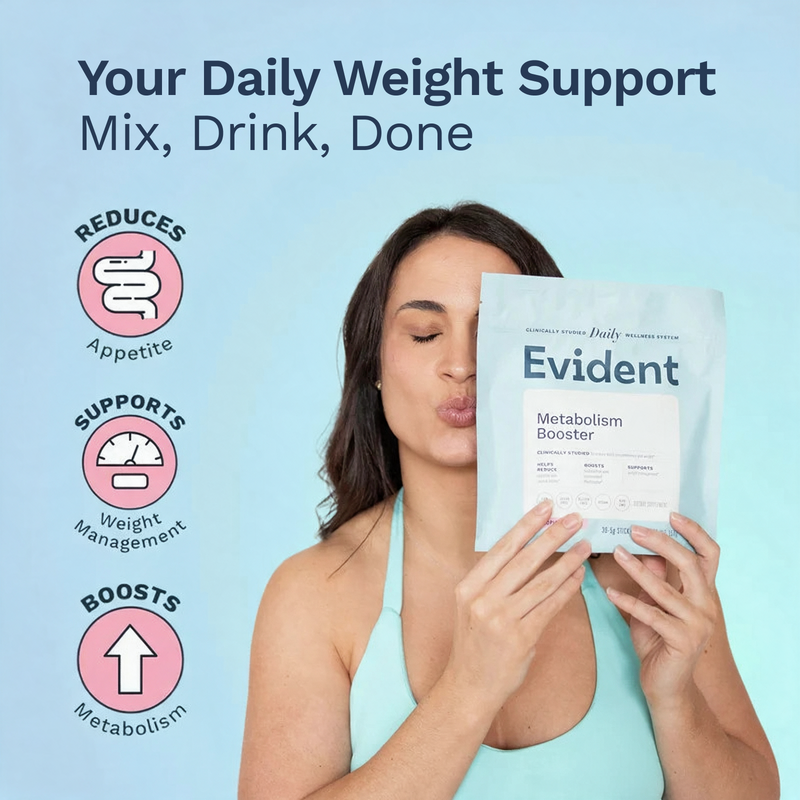
Evident Metabolism Booster combines prebiotic satiety support and fat-binding technology in a single daily serving.
Stimulant-based supplements may worsen PCOS metabolic outcomes
The HPA axis is frequently dysregulated in PCOS, contributing to elevated baseline cortisol. Stimulant ingredients — particularly caffeine — activate the HPA axis and can worsen insulin resistance and central fat accumulation. Non-stimulant metabolic support is not simply a preference for sensitive users; it may be clinically preferable for the PCOS population specifically.

The gut-PCOS axis is an emerging and clinically relevant area of research
Studies have found meaningful differences in gut microbiome composition between women with and without PCOS, including reduced microbial diversity and shifts correlated with insulin resistance and androgen levels. Prebiotic fiber — particularly inulin — selectively feeds beneficial bacteria (Bifidobacterium, Lactobacillus) that support short-chain fatty acid production and gut barrier integrity. Daily prebiotic intake is a low-risk, evidence-supported intervention for PCOS-related metabolic disruption.

Abdominal adiposity in PCOS carries specific cardiovascular risk
Waist circumference is an independent risk factor for cardiovascular disease and type 2 diabetes — and women with PCOS carry disproportionately elevated risk in both categories. H2OSlim® clinical data showed specific reduction in waist circumference, not just body weight, which is meaningful for PCOS management beyond aesthetic outcomes.

Eight to twelve weeks is the minimum effective duration for metabolic supplement interventions
Clinical trials for H2OSlim® ran for 8–24 weeks. Inulin-based satiety support similarly requires consistent daily intake for gut microbiome adaptation to occur. Short-term use does not produce the outcomes seen in clinical research. A supplement's format — its convenience and palatability — is therefore a clinical variable, not just a consumer preference.

Hormonal fluctuation in PCOS makes inconsistent support strategies less effective
PCOS disrupts the predictability of hormonal cycling, meaning symptom severity varies significantly across weeks. A daily routine that is unconditional — taken regardless of cycle phase — produces steadier metabolic support than approaches tied to cycle tracking or symptom protocols. Simplicity increases adherence; adherence drives outcomes.

Inulin and H2OSlim® both require adequate water intake to function as studied
Both the viscosity-based satiety mechanism of inulin and the fat-binding matrix of H2OSlim® depend on adequate hydration to reach full efficacy. The label instruction — mix one stick with 8–10 oz of cold water, consume within 3 minutes — reflects the clinical use conditions. The water is not incidental to the formula.

Clean ingredient standards matter more for a population managing an inflammatory condition
Systemic inflammation is a documented feature of PCOS. Evident Metabolism Booster uses non-GMO ingredients, plant-derived natural flavors, no artificial colors, and no major allergens. For women managing a chronic hormonal condition, ingredient quality is a practical health consideration — not a marketing claim.